
Marion Flow
By Muralist Christian Stanley

The Florida Wildlife Corridor is an 18-million-acre statewide network of connected lands and waters that supports wildlife and people.
Seen in dark green, 10 million acres are protected as federal lands, state parks and forests, county lands, water management district lands, or private lands under conservation easements.
The remaining 8 million unprotected acres in light green are opportunity areas for conservation and are mostly comprised of agricultural working lands, such as cattle ranches and timber land. Not only do these valuable spaces provide food and fiber for Florida and our nation, but they also provide interconnected landscapes that keep Florida’s wild spaces connected.
Our Mural Campaign is aimed at raising awareness of the importance of the Florida Wildlife Corridor in areas with the greatest ecological significance that have the highest risk of development by 2030.
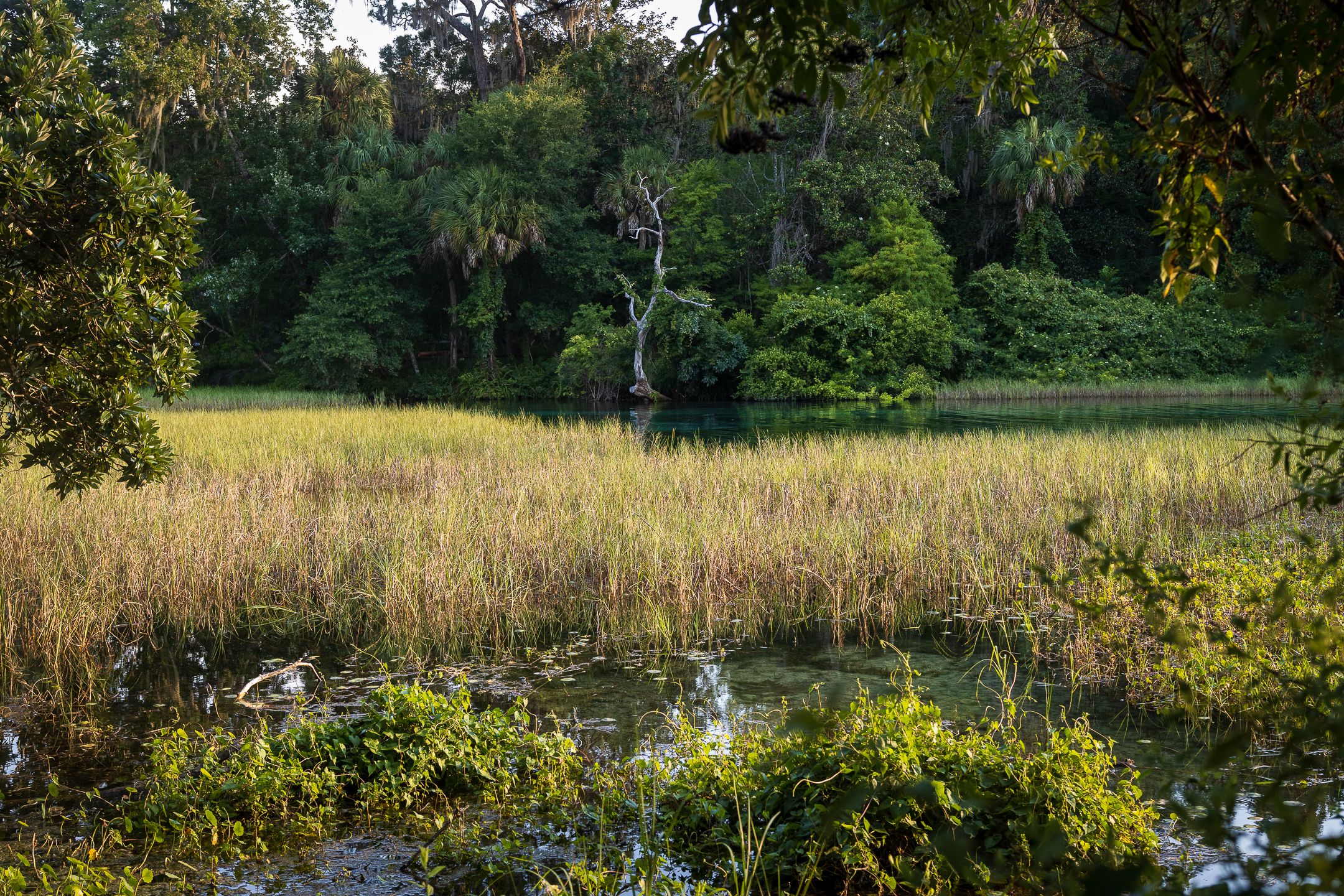
The geography surrounding the city of Ocala serves as vital connection points in multiple parts of the Corridor. To the east of Ocala is the Cross Florida Greenway and the spring-fed Rainbow River which connect to the Nature Coast Corridor. We highlighted this stretch of the Corridor in our 2021 expedition and documentary "Home Waters".
To the west of the city you have the spring-fed Silver and Ocklawaha Rivers as well as the Ocala National Forest which stretches north to complete the Ocala to Osceola (O2O) Corridor. We highlighted this stretch of the Corridor in our 2023 expedition and documentary "O2O Path to Connection".
Marion County is home to important fauna like the Florida Black Bear and North American River Otter, as well as the federally endangered Red-cockaded Woodpecker and threatened Florida Manatee. In this area you’ll also find some of the state’s most visited hiking trails including portions of the Florida National Scenic Trail. Locals and visitors alike enjoy an abundance of recreational activities in Marion County such as kayaking, paddleboarding, biking, camping, fishing, and swimming in the springs.
The wild spaces around Ocala and Marion County are currently in danger because of rapid population growth. Without thoughtful conservation and planning the connected landscape will be lost, resulting in diminished wildlife populations, degraded water quality and negative impacts on the outdoor recreation and ecotourism important to the local economy.
Meet The Artists
Christian Stanley is a Central Florida based artist that has lived in the Orlando area since graduating from the University of Central Florida in 2011 with a degree in graphic design. Born and raised in Stuart, FL, Christian’s art is often influenced by his roots and love for the wildlife of the Southeast. From an early age Christian sought out natural settings for inspiration, and continues to enjoy hiking and wildlife spotting with his wife, Jessica.
The two met in 2017 and soon after formed C. Stanley Creative while painting a small electrical box as a part of a community art initiative. Since then Christian has gone on to paint dozens of murals a year with his largest project to date spanning over 8,000 square feet in size. He has taken his mural art talents across the United States and overseas to international street art festivals.
Christian’s street art work is known for its signature “dash and dot” style, which borders on impressionism to give his subjects depth and vibrant color. He has had the privilege of working with large national brands and local community arts organizations alike.
Christian and Jessica work full time in the arts, and are firm believers in the power of art to change places for the better. In their travels they had the opportunity to see the power of public art at work in communities of all shapes and sizes, and find their most rewarding work to be in towns that understand that art can be used as a tool for community revitalization.



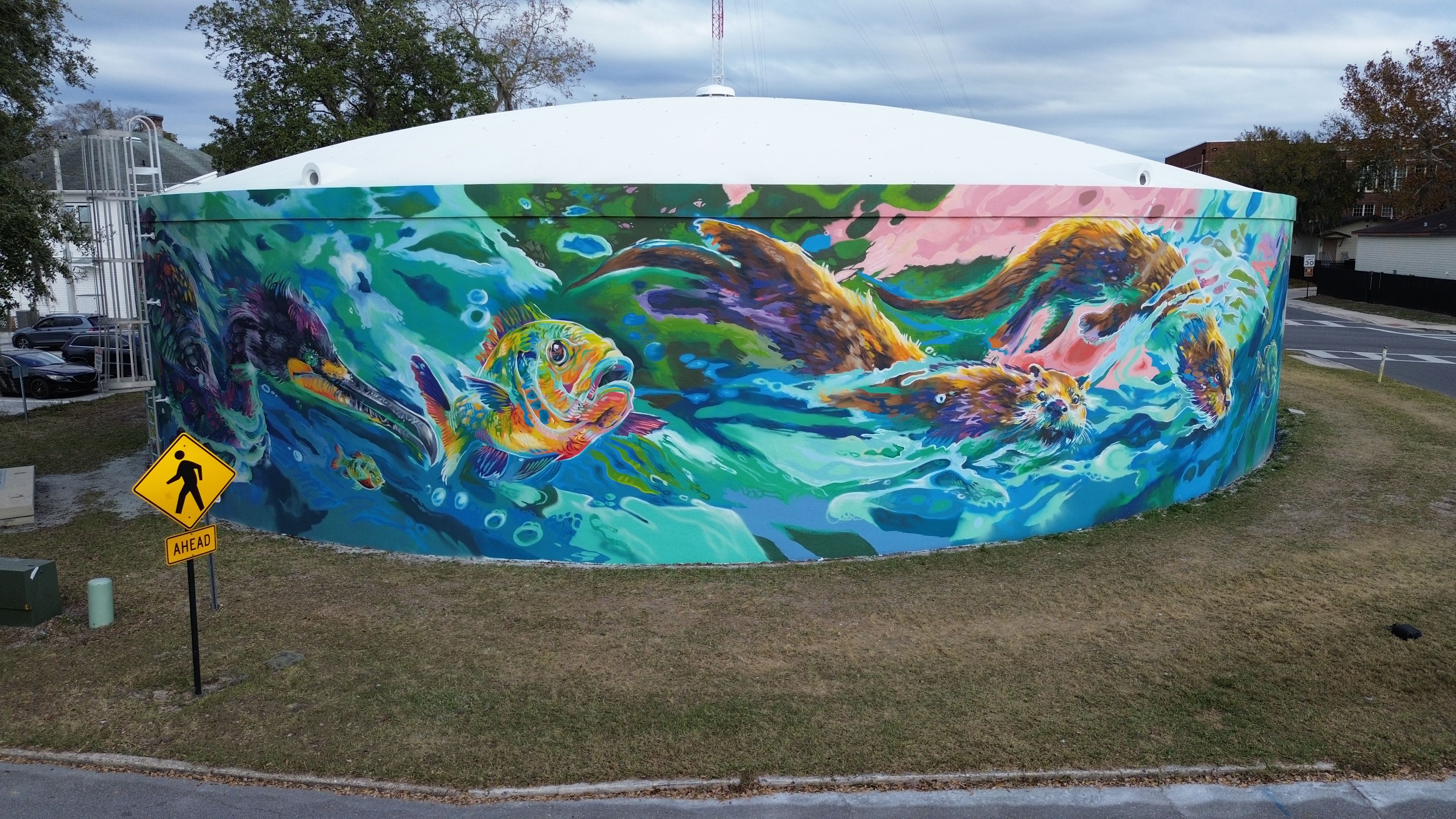
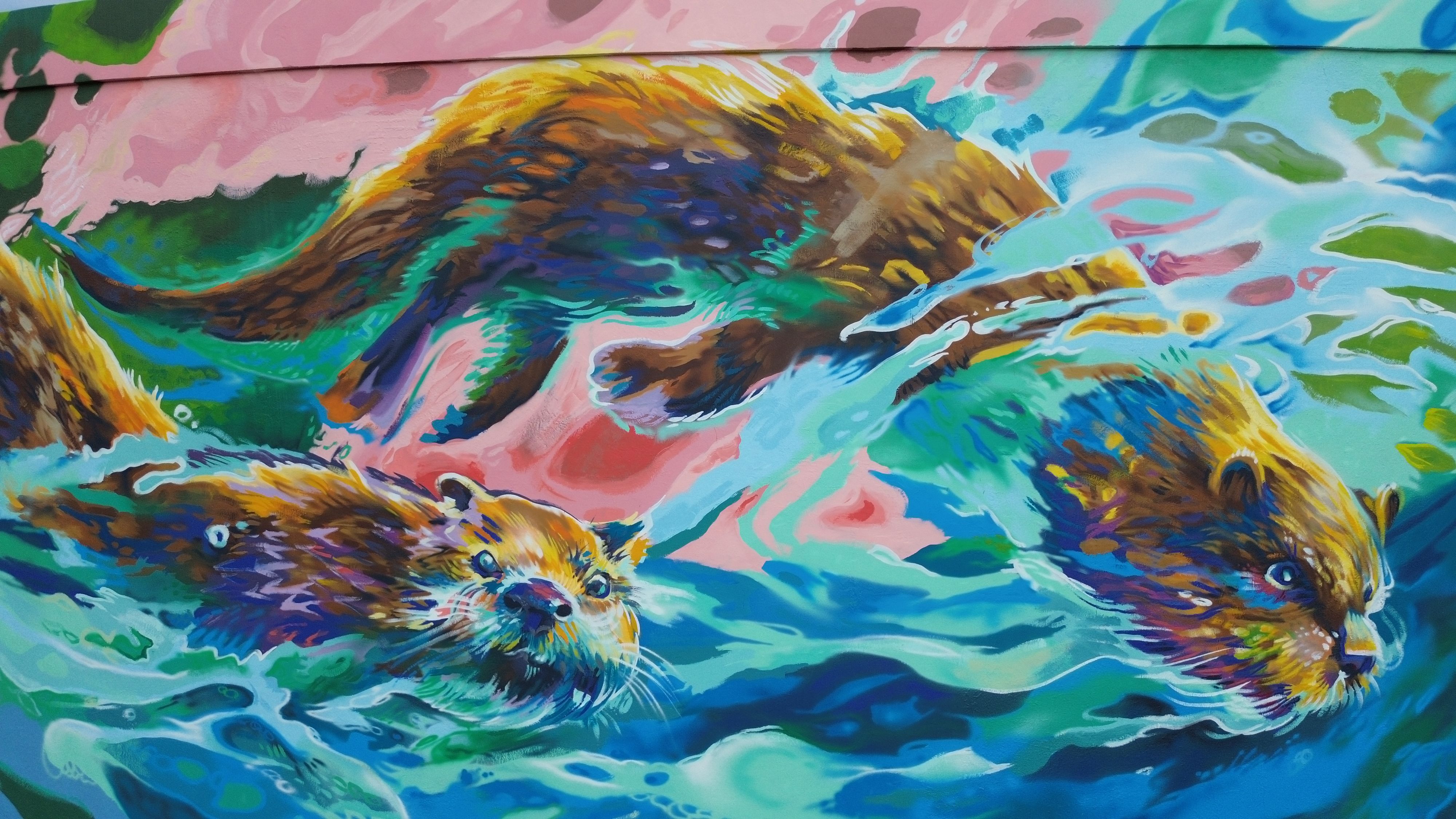
"Marion Flow" by Christian and Jessica Stanley showcases the one-of-a-kind spring fed rivers found in Marion County, and the local wildlife that call them home.
The Florida Fish and Wildlife Conservation Commission (FWC) manages fish and wildlife resources for their long-term well-being and the benefit of people. Thanks to their contributions, you can learn more about the species in this mural. Scroll to learn about each of the species featured.

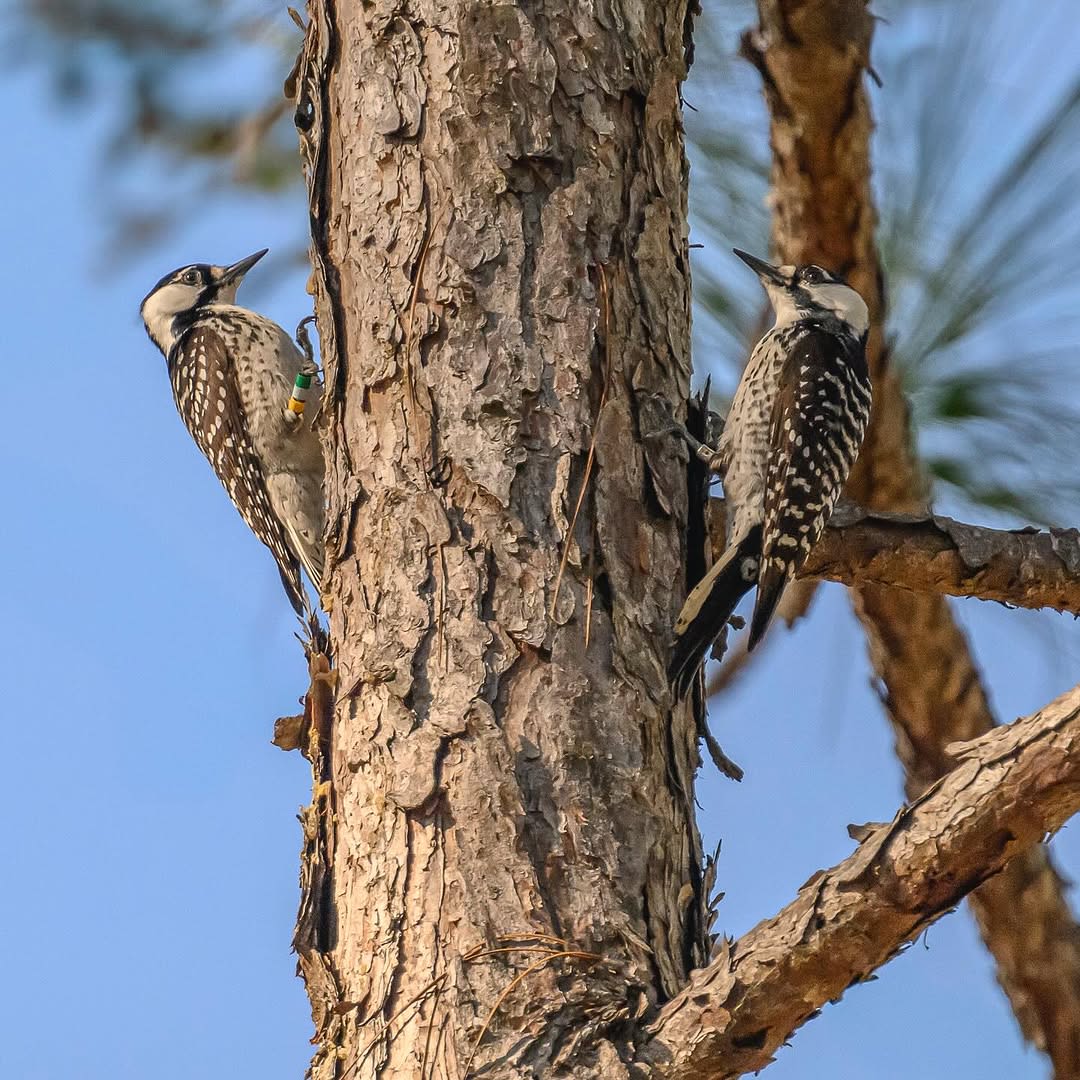
Photo by Rachelle Vance
Photo by Rachelle Vance
Red-cockaded Woodpecker
(Picoides borealis)
Red-cockaded woodpeckers (RCWs) have a large white patch located on their cheek, a black head and neck, a white belly, and a barred black and white back. The red-cockade, which is only found on the male, consists of a small red streak above the cheek and is rarely visible.
RCWs are unique in their nesting, as they only nest in self-made cavities in live, old-growth pine trees, as opposed to dead trees which most woodpeckers prefer. In Florida, RCWs inhabit old growth slash, longleaf, and loblolly pines. Because of the loss of old growth pine forests due to development, the RCW is federally and state listed as an endangered species.
The diet of RCWs mainly consists of insects, arthropods, and seeds.

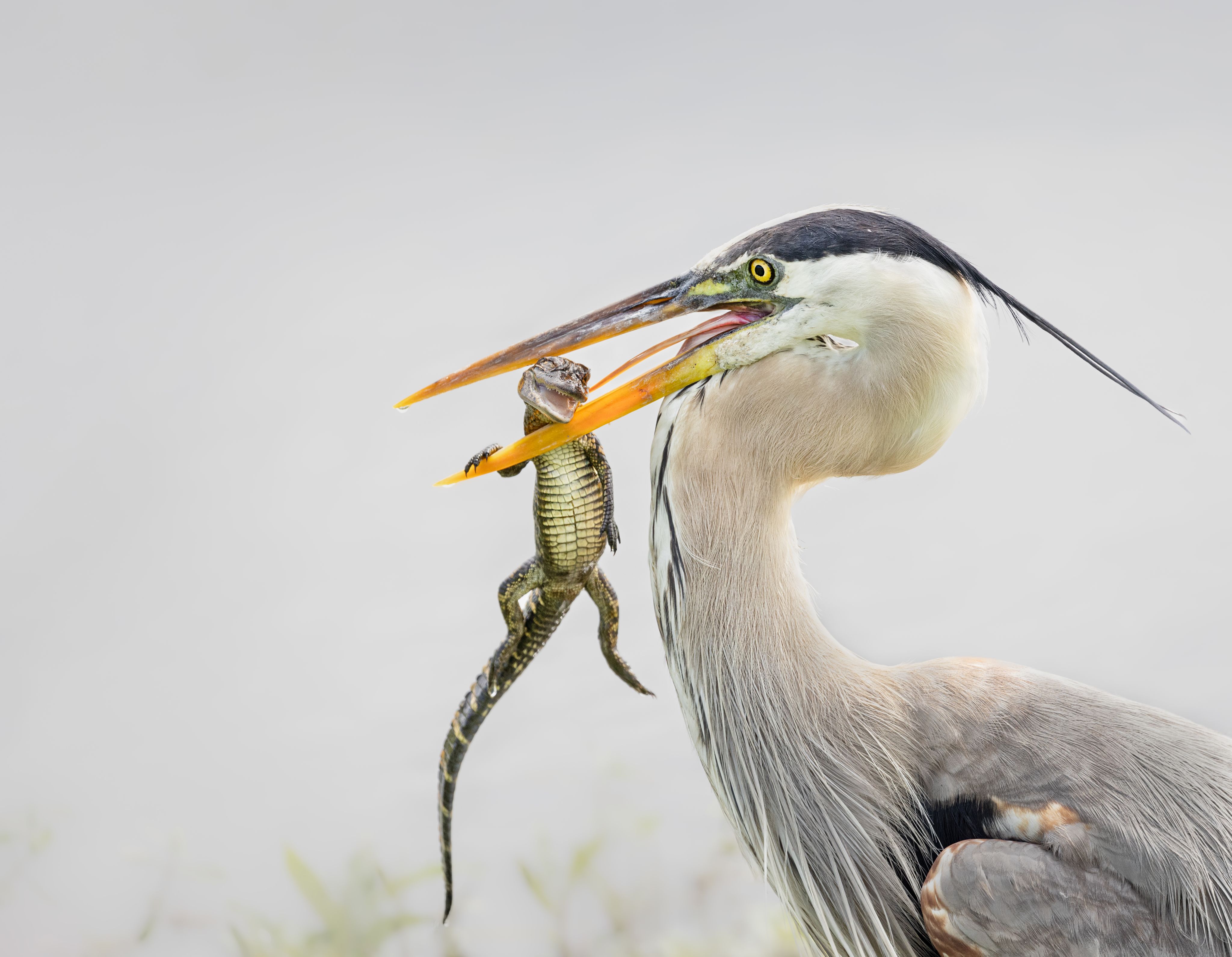
Photo by Robert Gloeckner
Photo by Robert Gloeckner
Great Blue Heron
(Ardea herodias)
The Great Blue Heron is a familiar sight to most Floridians. It is a permanent resident of wetlands throughout the state, often seen along ponds, lakes, and canals.
As its name suggests, the Great Blue Heron is our largest "dark" heron, although it is frequently mislabeled a "crane" by the public.
When foraging, Great Blue Herons exploit all types of wetlands and, occasionally, even upland habitats. They feed on a variety of prey, including fish, insects, crustaceans, amphibians, snakes, young birds, and rodents.

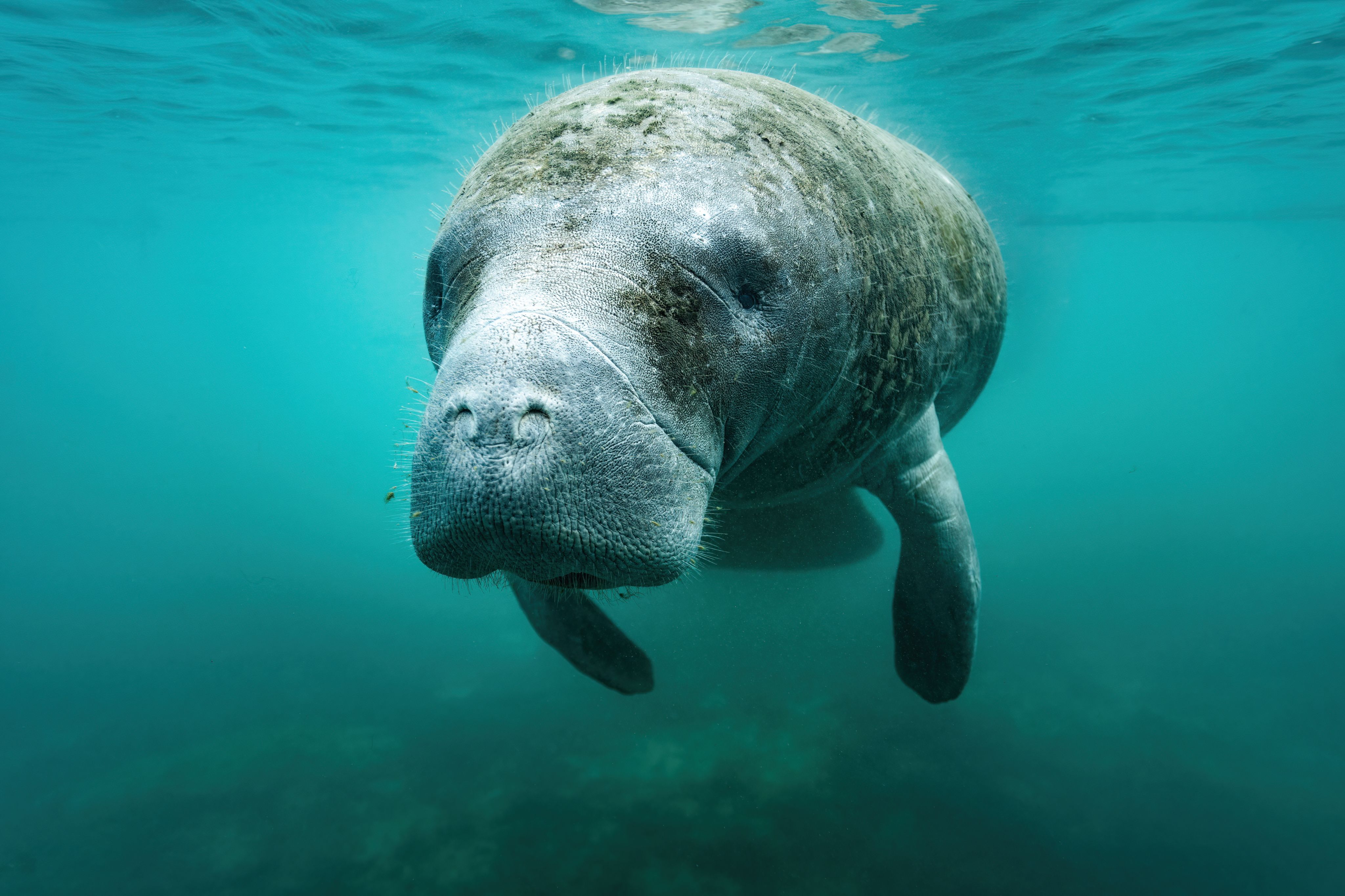
Photo by Marshall Smith
Photo by Marshall Smith
Florida Manatee
(Trichechus manatus latirostris)
The Florida manatee inhabits the state’s coastal waters, rivers, and springs. During the warmer months, some Florida manatees travel up the eastern coastline or far into the Gulf of Mexico. Prior to winter’s coldest months, these adventurous manatees migrate back to Florida’s warm water habitats, which include artesian springs.
The Florida manatee is a subspecies of the West Indian manatee that lives in and is native to Florida. Florida manatees are large, gray, aquatic mammals. Adult manatees are typically 9-10 feet long from snout to tail and weigh around 1,000 pounds.
At birth, a manatee calf weighs around 60 - 70 pounds. Manatees have two fore-limb flippers that they use for steering movements and to hold vegetation while eating and a large, round, flattened paddle-shaped tail that is used for swimming.
Algae often grows on the backs and tails of manatees, which makes their skin color appear green or brown. Barnacles (found mostly on coastal dwelling manatees) often leave round scars from attachment sites; movement from saltwater to freshwater habitats clears the animals of these saltwater hitchhikers.

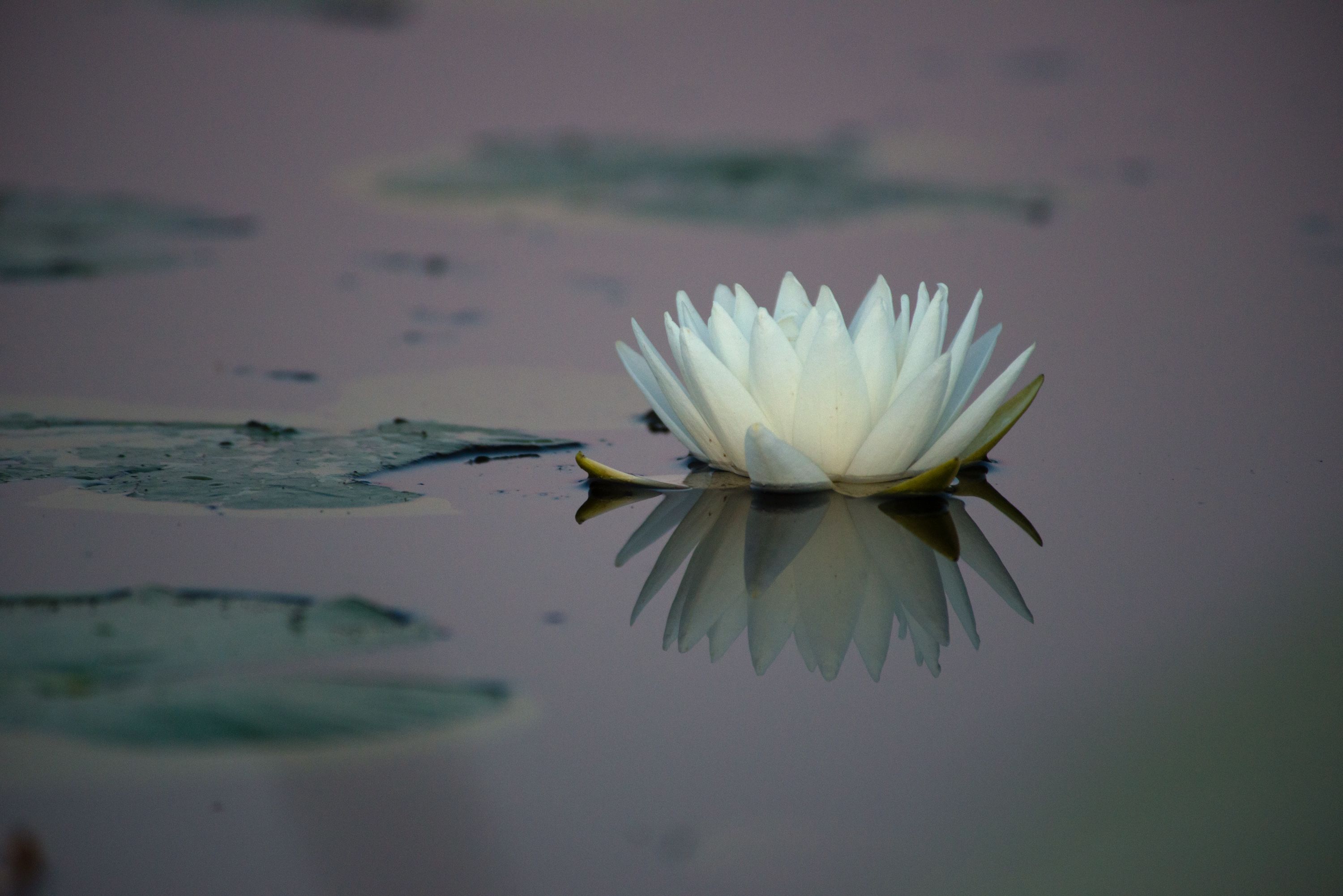
Photo by Carlton Ward Jr.
Photo by Carlton Ward Jr.
American White Waterlily
(Nymphaea odorata)
This showy member of the water lily family (Nymphaeaceae) is a beautiful plant to admire as you paddle a canoe around a lake or down a sluggish stream. This plant is generally found in quiet water up to 5 or 6 feet deep and is adapted to its aquatic habitat.
The white water lily is recognized by its large, floating, circular leaves and large, white flowers. The waxy leaves are up to 8 inches across with a narrow v-shaped cleft where the stem attaches. The underside of the leaf is green or reddish-purple in color. The flower can be up to 5 inches wide with numerous white petals and is attached to a separate stem from the leaf. Forty or more yellow stamens surround a central ovary and disk-shaped stigma.
It usually flowers only from early morning until noon and is very fragrant.
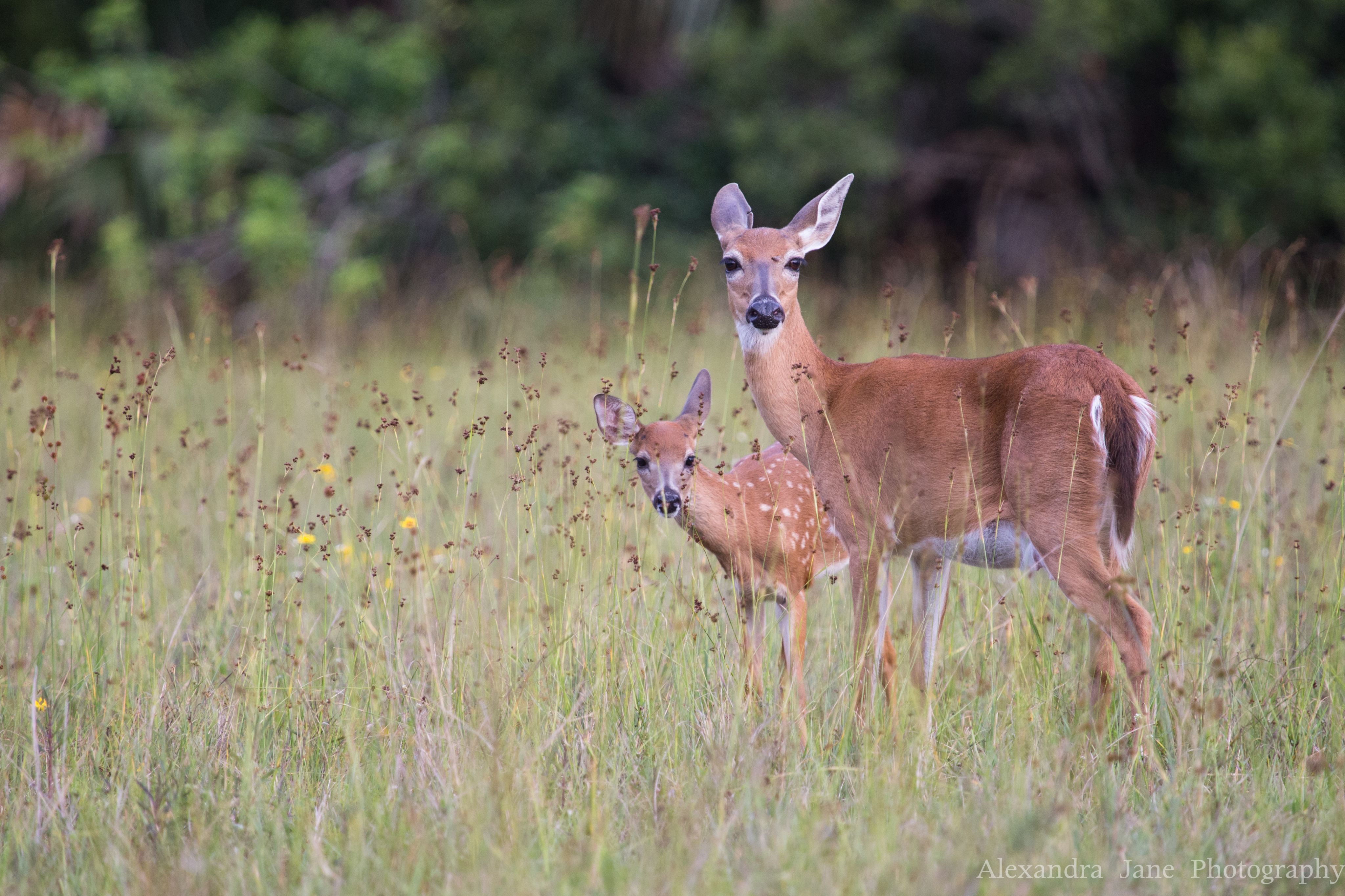
Photo by Alex Freeze
Photo by Alex Freeze
White-Tailed Deer
(Odocoileus virginianus)
White-tailed deer can be found throughout Florida from the panhandle to the keys. They prefer habitats with young, low-growing vegetation and edge, where the intersection of two different habitats allows deer to easily feed and avoid predators.
The common name refers to the tail; it is black/brown above and white below. White-tailed deer vary in size depending on the habitat. Adult male deer in Florida average 115 pounds, but can reach 190 pounds or more in North Florida. The smaller females average 90 pounds with larger females weighing 120 pounds or more.
Deer are most active at dawn and dusk. They are primarily browsers, feeding on the leaves, shoots, flowers and fruits of trees, shrubs, and forbs. Occasionally, they may browse and damage planted shrubs, landscaping or cultivated crops.

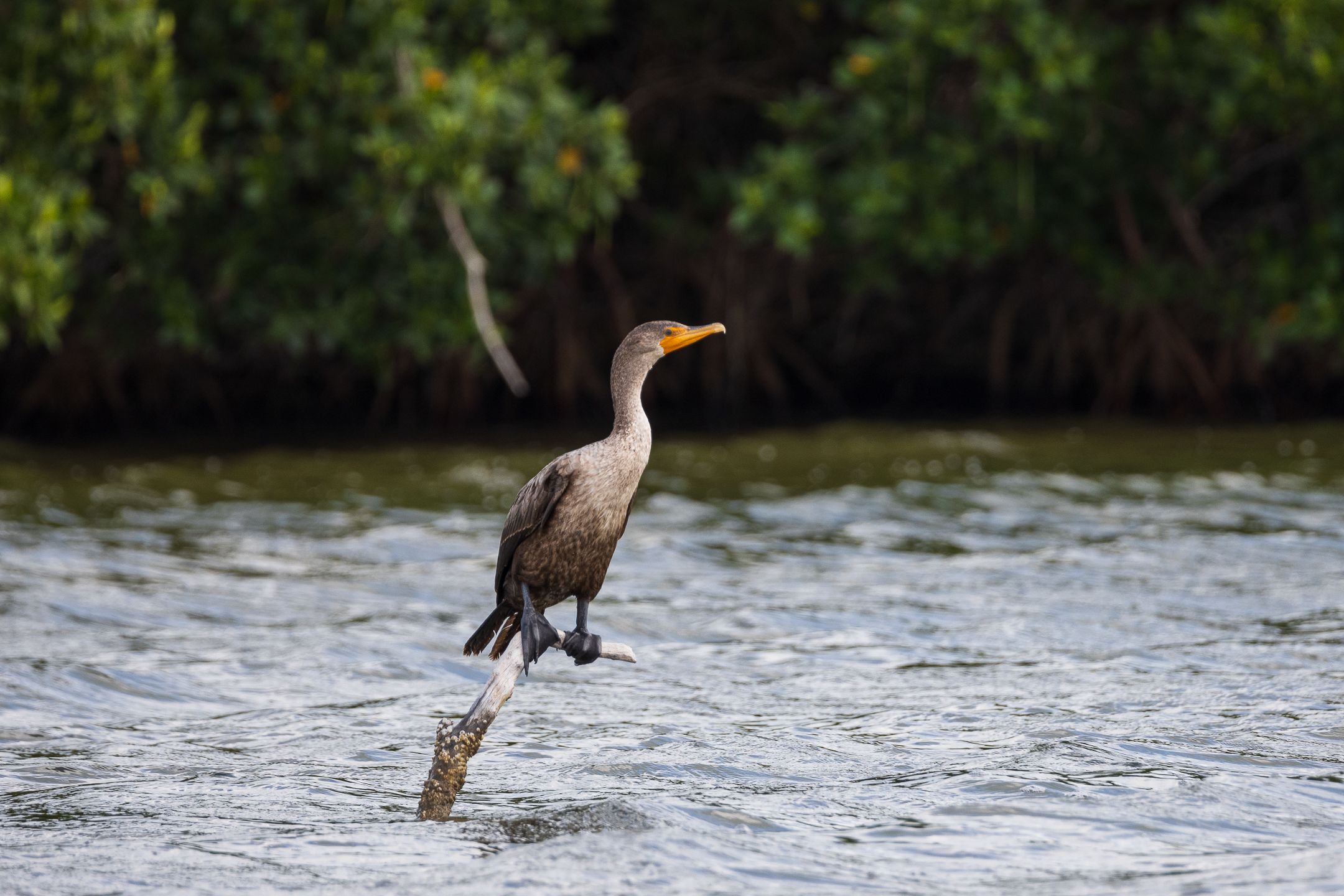
Photo by Ethan Coyle
Photo by Ethan Coyle
Double-crested Cormorant
(Phalacrocorax auritus)
Double-crested Cormorants are common winter residents throughout Florida, except in the interior of the Panhandle. The Double-crested Cormorant is well-known to Floridians because it occurs abundantly along heavily populated coastal areas of the state.
Fishermen are frequently amazed at the length of time it remains below the surface of the water seeking out its prey, which is almost exclusively fish.
Double-crested Cormorants breed in colonies ranging from fewer than a dozen nests to several hundred or more. They frequently nest with other colonial-nesting species. Colonies are most often on vegetated coastal barrier and dredge-spoil islands, but are also found on wooded islands in rivers, marshes, and lakes.
Bluegill
(Lepomis macrochirus)
Bluegill are common throughout Florida but are most common in lakes and ponds.
Bluegill have the deep-bodied look of "bream," with a long dorsal fin and slightly forked tail. A dark ear covering and a blotch at the dorsal fin's back bottom edge set them apart.
Bluegill eat mostly insects and their larvae. Bluegill spawn throughout summer, congregating in large "beds". Anglers may find 30-40 shallow nests scooped out in sandy areas.
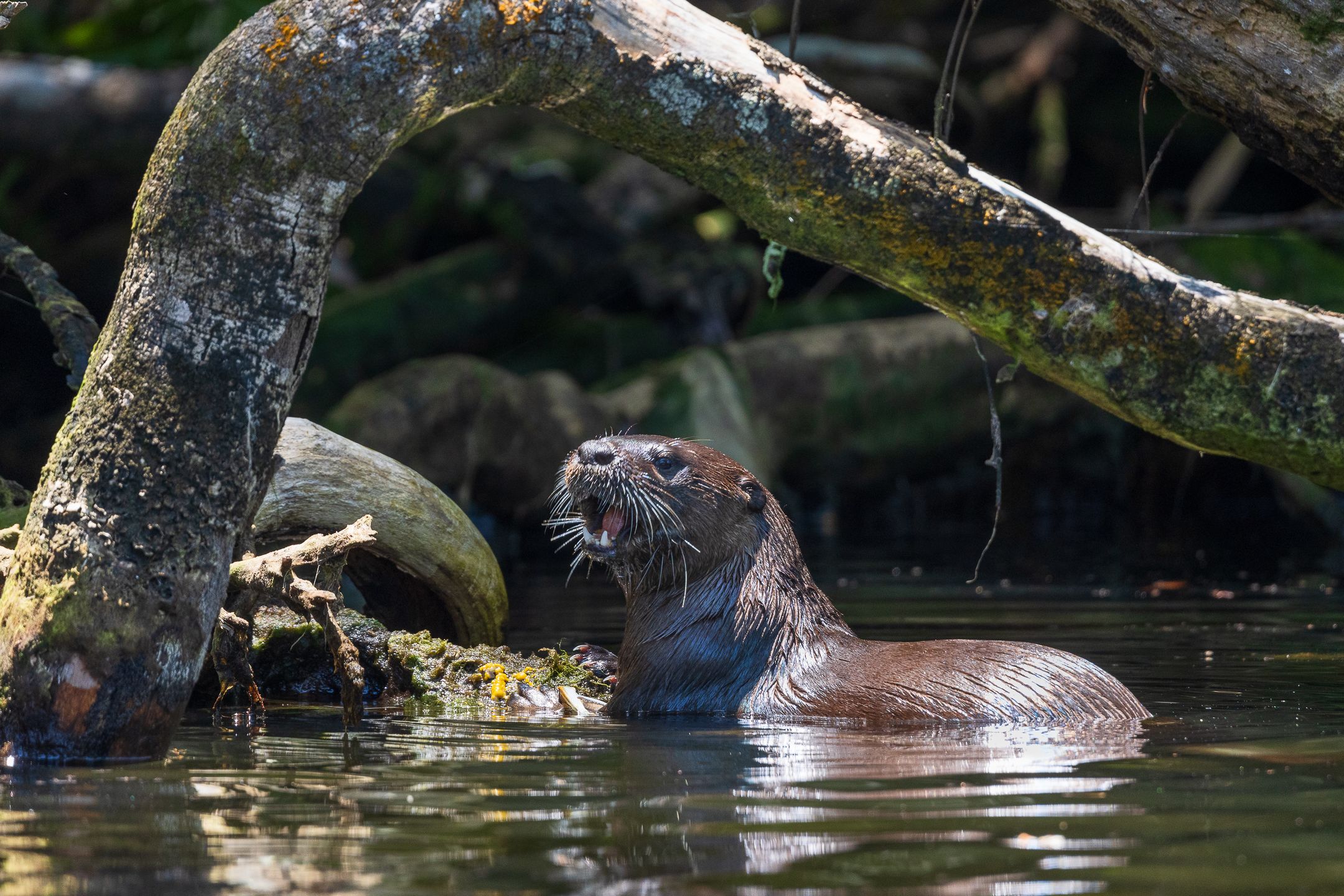
Photo by Ethan Coyle
Photo by Ethan Coyle
North American River Otter
(Lontra canadensis)
This water-loving animal is found throughout Florida except the Keys. North American river otters usually prefer fresh water and can be found in springs, rivers, creeks, lakes, ponds, and swamps. Otters live in burrows on the bank of the water body, often under tree roots. They may dig their own burrow or remodel a beaver’s burrow.
The river otter is adapted for both land and water with short legs, webbed toes, and a strong, flattened tail. Otters have five toes and the heel pad tends to be somewhat horseshoe shaped. The ears appear large on its small flattened head. River otter fur ranges from light to dark, rich brown.
River otters are mostly nocturnal and feed on shellfish and fish. They are social animals, and groups usually consist of a female and her juvenile offspring.
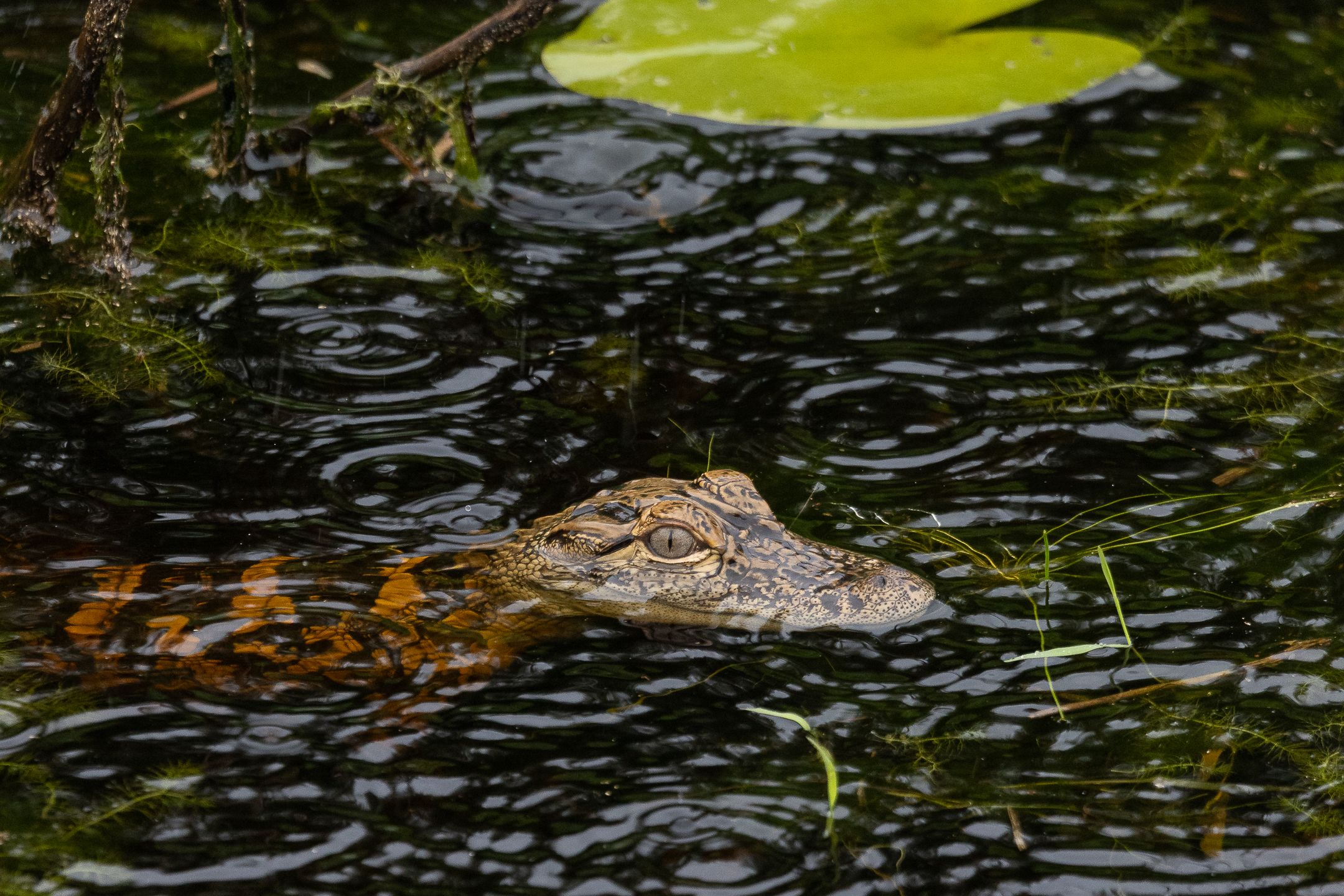
Photo by Ethan Coyle
Photo by Ethan Coyle
American Alligator
(Alligator mississippiensis)
Alligators have inhabited Florida's marshes, swamps, rivers and lakes for many centuries, and are found in all 67 counties. There are an estimated 1.3 million Alligators in Florida.
Alligators are opportunistic feeders. Their diets include prey species that are abundant and easily accessible. Juvenile alligators eat primarily insects, amphibians, small fish, and other invertebrates. Adult alligators eat rough fish, snakes, turtles, small mammals, and birds.
Alligators are ectothermic (cold blooded). They regulate their body temperature by basking in the sun or moving to areas with warmer or cooler air or water temperatures. They are most active when temperatures are between 82° to 92° F. They stop feeding when the ambient temperature drops below approximately 70° F, and they become dormant below 55° F. Alligators are dormant throughout much of the winter. During this time, they can be found in burrows that they construct adjacent to an alligator hole or open water, but they occasionally emerge to bask in the sun during periods of warm weather.

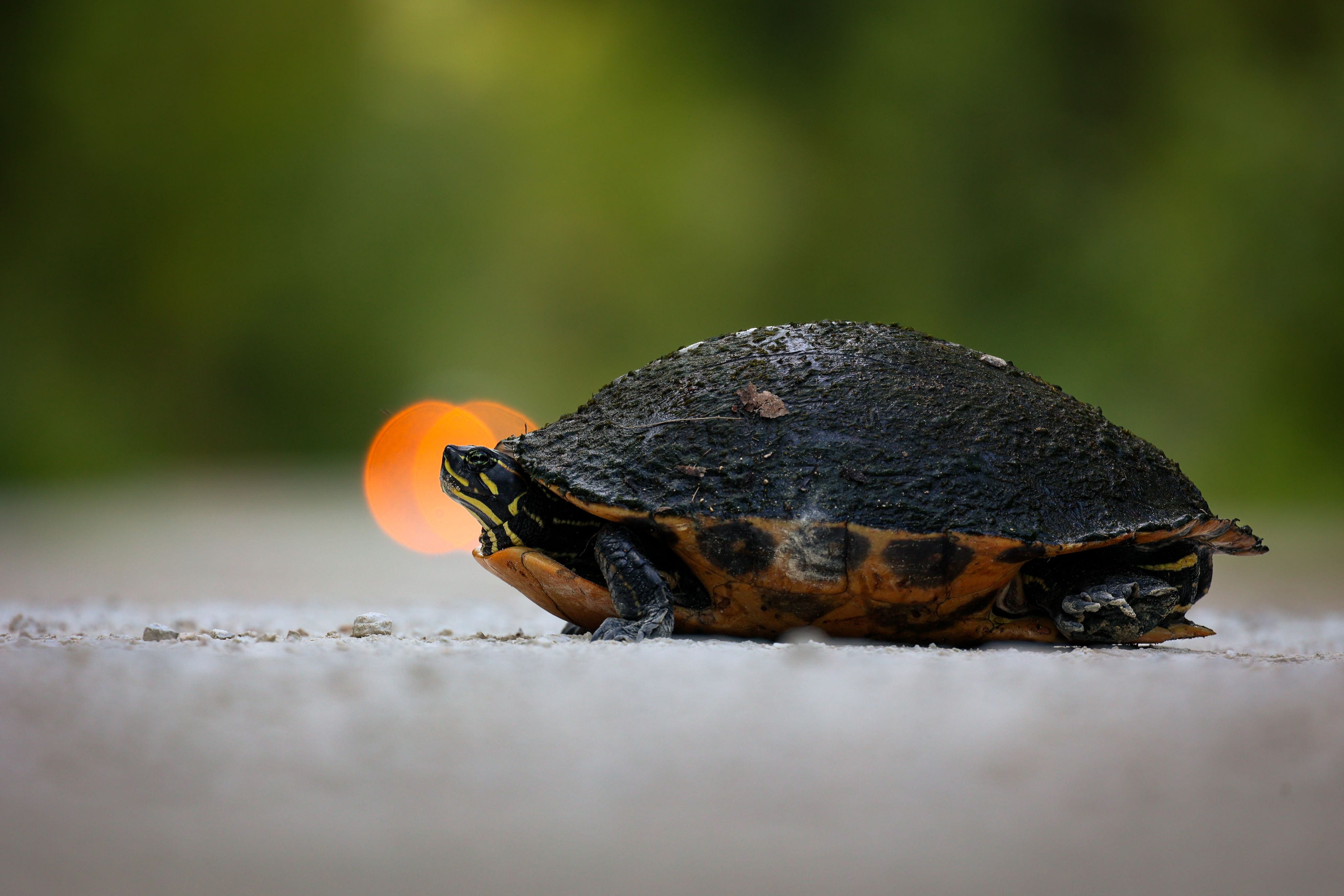
Photo by Parks Marilla
Photo by Parks Marilla
Florida Red-bellied Cooter
(Pseudemys nelsoni)
The red-bellied cooter shell is black and highly domed with reddish to yellow-orange vertical stripes on each scale. The belly is yellow orange to reddish. Adult size ranges from 8-12 inches with a maximum shell length of 14.8 inches.
Cooters are predominately herbivorous, and primarily eat rooted aquatic vegetation. Juveniles may eat insects and small fish but shift to a plant-based diet as they age. Cooters can be most easily seen basking on floating logs, rocks or vegetation on sunny days and are quick to flee to the water if disturbed. Cooters are aquatic turtles that only leave the water to nest, or search for new habitat during periods of heavy rain or drought.
The Ocala Mural was made possible by the following:
Sponsors


Partners



 Built with Shorthand